Best Flood Survival Kit 2026: Complete Checklist & Evacuation Guide
Flooding is the most common and costly natural disaster in the United States — averaging $8 billion in annual damages per NOAA. A properly stocked flood survival kit prepares you for both sheltering in place and rapid evacuation.
2026 Flood Season Alert
NOAA forecasts above-normal flood risk across multiple US regions through September 2026. Now is the time to prepare your flood emergency kit — before you need it.
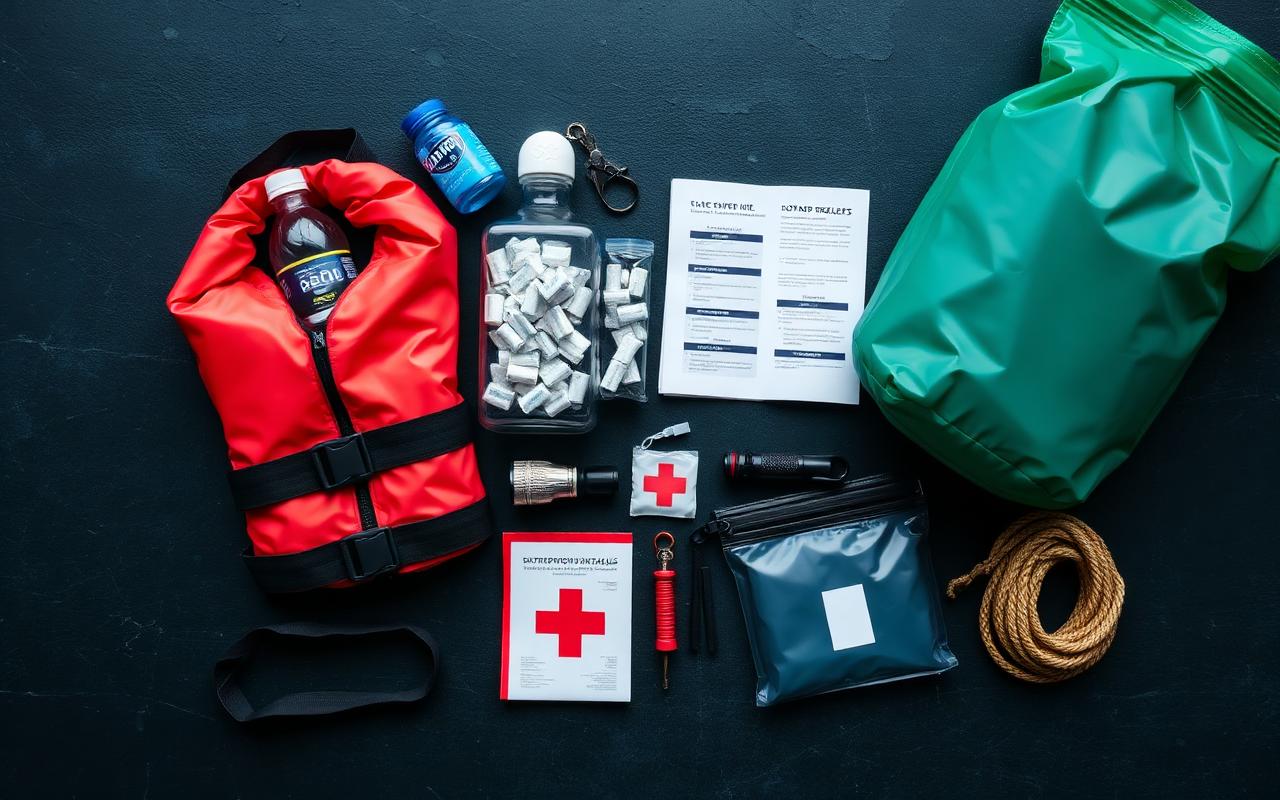
What a Flood Survival Kit Protects Against
Floods take more lives in the US each year than tornadoes, hurricanes or lightning — a fact most homeowners underestimate until water is at the door. Per the National Weather Service, the average flood-related fatality involves a vehicle and just two feet of moving water. A flood survival kit is built to prevent two specific failures: contamination (because tap water and stored supplies become unsafe within hours) and immobility (because you may have less than thirty minutes to evacuate).
Flash floods can develop in minutes from heavy rainfall, river flooding may give hours or days of warning, and coastal storm surge adds a third dimension. Your kit must account for water damage to supplies, potential evacuation, and contaminated water sources. Unlike other emergencies, floods specifically threaten your stored supplies — which is why every item belongs in waterproof packaging and elevated storage.
Pair this kit with a complete home emergency kit for shelter-in-place scenarios and a bug out bag for rapid evacuation. Coastal and river-adjacent households should also maintain a 72-hour emergency kit per FEMA guidelines.
2026 Flood Risk: Is Your Area Affected?
Flooding remains the most common and costly natural disaster in North America. Unlike hurricanes or earthquakes, floods can occur in any state, in any season. Flash floods — the deadliest type — can develop in under 6 hours from heavy rainfall. River flooding near dams or in floodplains may give 12-48 hours of warning. Coastal flooding from storm surge during hurricane season (June–November) is increasingly severe due to rising sea levels.
Regardless of your region, FEMA recommends having flood supplies ready before a watch or warning is issued. Once flooding begins, stores empty within hours and roads become impassable. Keep a car emergency kit in every vehicle so you're ready even if you must evacuate by car.
Highest-Risk Flood Scenarios
⚡ Flash Floods (Under 6 Hours Warning)
- • Mountainous and canyon areas
- • Urban areas with poor drainage
- • Near burn scars from wildfires
- • Desert Southwest during monsoon season
Priority: Grab-and-go bag always ready
🌊 River/Coastal Flooding (12-48hr Warning)
- • Mississippi, Ohio, Missouri river valleys
- • Gulf Coast during hurricane season
- • Pacific Northwest in winter/spring
- • Any area within a FEMA flood zone
Priority: Full kit + evacuation plan
Who Needs a Flood Kit?
- Anyone within 5 miles of a river, lake or coastline
- Homeowners with basements, regardless of flood zone
- Residents of FEMA-designated 100-year or 500-year zones
- Apartment dwellers below the third floor
- Hurricane-prone states (FL, TX, LA, NC, SC)
- Flash-flood prone areas (AZ, NM, CO, UT canyons)
- Anywhere downstream of an aging dam or levee
- Renters — landlord insurance doesn't cover your belongings
Flood Kit Essential Supplies (Printable Checklist)
Waterproof Protection
- Heavy-duty dry bags (3+ sizes)
- Sealed document container
- Waterproof phone pouch
- Zip-lock bags (assorted)
- Waterproof flashlight + headlamp
Water & Purification
- Bottled water (3 gal/person)
- Water purification tablets
- Portable water filter (Sawyer/LifeStraw)
- Electrolyte packets
- Collapsible 5-gal water jug
Evacuation Essentials
- Bug out bag pre-packed
- Documents in waterproof pouch
- Cash in small bills
- Spare car & house keys
- 7-day prescription supply
Safety & Rescue
- Coast Guard-approved life jacket/person
- Marine whistle for signaling
- Bright cloth signal flag
- 50+ ft rope
- Trauma-rated first aid kit
Power & Communication
- NOAA weather radio (hand-crank)
- 20,000 mAh power bank
- Extra batteries (AA/AAA)
- Solar charger
- Backup phone
Food & Hygiene
- 3-day non-cook food supply
- Manual can opener
- Sanitation wipes
- Heavy-duty trash bags
- N95 respirator masks
Cost Breakdown: DIY vs Pre-Made
| Category | DIY Cost | Pre-Made Cost |
|---|---|---|
| Waterproof storage & dry bags | $35–$60 | Included |
| Water & purification (4 people, 3 days) | $40–$70 | $50 |
| First aid & medications | $25–$50 | $30 |
| Light, radio, power | $60–$100 | $45 |
| Life jackets (4) | $80–$160 | Not included |
| Total (family of 4) | $240–$440 | $175 + life jackets |
DIY Alternative: Build Your Own
If you already own camping gear, a DIY flood kit costs less and lets you customize for your household. Start with three heavy-duty dry bags (one for documents, one for first aid and medications, one for clothing and hygiene). Add a Sawyer Squeeze filter and Aquatabs for water, an NOAA hand-crank radio, a 20,000 mAh power bank, and Coast Guard-approved life jackets sized to each family member. Total weight should stay under 25 lbs per person so any adult can carry one bag during evacuation.
Maintenance Checklist
Monthly
Inspect dry bags for cracks or seal failure
Every 3 months
Test flashlight, radio and power bank
Every 6 months
Rotate bottled water and food, update document copies
Annually
Replace purification tablets, batteries, first aid expirables
Pre-season (May)
Verify life jacket fit for growing children
After any use
Restock immediately while items are fresh in mind
Storage Tips
- Store on the highest floor — never basement or ground level in flood-prone homes
- Use stackable waterproof totes elevated at least 12 inches off the floor
- Keep one duplicate grab bag by your primary exit for sub-30-second evacuation
- Label every dry bag with contents in permanent marker
- Store car keys, wallet and phone charger in the same predictable spot every night
- Photograph your kit contents annually for insurance documentation
Real Flood Scenarios
Hurricane Helene, North Carolina (2024)
Residents of Asheville and surrounding mountain communities — none of which were in designated flood zones — lost water, power and road access for 7–14 days. Survivors who had pre-positioned dry bags upstairs and a Sawyer-grade water filter avoided the worst dehydration injuries reported in shelters.
Houston Flash Flood (2023)
A summer thunderstorm dropped 12 inches in 6 hours. Families who kept documents in waterproof pouches by their exit evacuated to higher ground in under 20 minutes. Those who waited to gather paperwork lost vehicles to fast-rising water.
Vermont River Flooding (2023)
Stationary thunderstorms overwhelmed century-old infrastructure. Households with NOAA weather radios received warnings 90 minutes before the worst flooding — enough time to relocate vehicles and grab pre-packed bags.
Frequently Asked Questions
Common Mistakes People Make
After helping hundreds of readers build their kits, these are the mistakes we see repeated most often — and how to fix them.
Storing emergency supplies in the basement
Fix: Basements flood first. Move your kit to the second floor, an upstairs closet, or at minimum a high shelf in waterproof containers.
Skipping water purification because you have bottled water
Fix: Three days of bottled water for a family is heavy and bulky. Add purification tablets and a portable filter as a lightweight backup once your bottled supply runs out.
Driving through standing water
Fix: Two feet of water floats most vehicles. The NWS 'Turn Around Don't Drown' campaign exists because more than half of US flood deaths happen in vehicles. Always reroute.
Assuming homeowner's insurance covers flood damage
Fix: It doesn't. Buy a separate NFIP or private flood policy at least 30 days before storm season — coverage has a mandatory waiting period.
Leaving documents in a regular filing cabinet
Fix: Move IDs, insurance cards, deeds, prescriptions and a USB backup into a sealed waterproof pouch you can grab in 60 seconds.
Building a Flood Emergency Kit
Floods are the most common — and most expensive — natural disaster in Canada. A purpose-built flood emergency kit is different from a generic 72-hour kit: every item has to survive water exposure, be fast to grab during a rising-water evacuation, and keep your family safe while you wait out displacement that may stretch from hours to weeks.
Why a flood-specific kit matters
Flash floods can reach evacuation-level depths in under 15 minutes. Unlike a winter storm or power outage, you usually can't shelter in place — you have to leave, often on foot, often soaked. A generic emergency kit stored in a cardboard box in the basement will be the first thing destroyed.
A flood kit solves three problems at once: it survives water, it travels with you, and it keeps documents, electronics, and medication intact when everything around them is wet.
Core flood kit checklist
- Waterproof dry bag (20–40L) or sealed plastic tote as the kit's container
- 3 days of bottled water per person (4 L/person/day)
- Ready-to-eat food that needs no cooking (bars, pouches, canned)
- NOAA/Environment Canada weather radio (hand-crank)
- Waterproof flashlight + spare lithium batteries
- First aid kit sealed in a dry bag
- Prescription medications (2-week supply in waterproof container)
- Copies of ID, insurance, deed/lease in a zip-seal bag
- Cash in small bills (ATMs often fail in flood zones)
- Whistle, glow stick, and reflective vest for visibility in rescue scenarios
- Change of clothes + sturdy waterproof boots
- N95 masks (mold and contaminated dust after waters recede)
- Heavy-duty work gloves
- Multi-tool and duct tape
Waterproofing: what actually works
Most people overestimate "water resistant" gear. A backpack labelled water-resistant will soak through in 20 minutes of heavy rain or any submersion. For flood kits, you need IPX-rated dry bags (look for IPX7 or higher) or roll-top dry sacks rated for kayaking.
Inside the dry bag, double-protect: documents and electronics go into zip-seal freezer bags first, then into the dry bag. Phones can also be vacuum-sealed in food-saver bags — a trick used by river guides for decades.
Storage: where to keep your flood kit
Never store a flood kit in the basement. That's the first room to flood. Best locations are an upper floor closet, a hall closet near the main entrance, or — for high-risk areas — the trunk of your vehicle if you can park it on higher ground.
Pair the kit with a written family evacuation plan taped to the inside of the closet door. Include two routes out of your neighborhood (flood waters block roads unpredictably), a meeting point, and out-of-area contact.
Common flood-kit mistakes
- Storing in the basement — first to go underwater
- Using a cardboard box or fabric backpack instead of a dry bag
- Forgetting cash — power outages take down debit/credit
- No prescription buffer — pharmacies are often closed for days
- Leaving documents at home — replacing ID after a flood takes months
- Skipping work gloves and N95s — the worst exposure is during cleanup, not the flood itself
Cost: DIY vs pre-built
A solid DIY flood kit for a family of four runs $180–$280 CAD if you already own a dry bag and flashlight. Pre-built kits from reputable Canadian brands range from $150 (basic 72-hour) to $400+ (deluxe family flood-ready). The trade-off: pre-built is faster and includes a quality container; DIY lets you tailor food preferences and medication storage.
For most families, a hybrid approach wins: buy a pre-built 72-hour kit, then upgrade it with a dedicated dry bag, a NOAA radio, and a waterproof document pouch.
After the flood: contamination, mold, and recovery
Flood water is never clean. It carries sewage, fuel, pesticides, and sharp debris. Do not enter standing water without waterproof boots and work gloves. After waters recede, mold can take hold in 24–48 hours — N95 masks and rapid drying (fans, dehumidifiers if power is back) are essential.
Document everything with phone photos before you start cleanup; insurance claims depend on it. Keep receipts for hotel stays, replacement clothing, and meals — Canadian disaster financial assistance programs reimburse many of these.
Quick answers
- How much water should a flood kit have?
- Plan for 4 litres per person per day for at least 3 days — 2 litres for drinking and 2 for hygiene and food prep. For a family of four, that's a minimum of 48 litres on hand, though much of that can be in your home pantry rather than the grab-bag.
- Are insurance papers really worth packing?
- Yes. After a flood, you'll need policy numbers and proof of ownership within days to start a claim. Keep a printed copy in a waterproof pouch in the kit and a digital copy in cloud storage.
- Can I use a regular backpack with a rain cover?
- Only as a last resort. Rain covers fail in submersion and heavy wind-driven rain. A dedicated 20–40 L dry bag costs $30–60 CAD and lasts decades — it's the single most important upgrade for a flood kit.
- Should I shelter in place or evacuate?
- Always follow local emergency orders. As a rule, evacuate early if your home is in a designated flood zone or near a river. Sheltering in place is only safe in multi-story homes well above predicted flood levels — and you still need the kit upstairs.
- What food works best for a flood kit?
- Anything that needs no cooking, no refrigeration, and minimal water: energy bars, canned beans/tuna with pull-tabs, peanut butter, dried fruit, and ready-to-eat meals (MREs). Rotate every 12 months.
- How often should I check the kit?
- Inspect every 6 months — water and food rotation, battery test, medication expiry, and re-seal any dry bags. Daylight saving time changes are an easy reminder.
Flood Survival Tips: Before, During & After
Flooding kills more Canadians than any other weather event. The difference between a close call and a tragedy usually comes down to decisions made in the first 30 minutes — and the preparation you did months earlier. These flood survival tips are organized by phase: long before a flood, the day water starts rising, and the dangerous return-home period that follows.
Before a flood: long-term prep
- Check your home's flood-zone designation on the federal flood map
- Buy overland flood insurance — most standard policies exclude it
- Elevate furnaces, water heaters, and electrical panels above expected flood levels
- Install backflow valves on sewer lines to prevent backup
- Keep digital copies of ID, deeds, and insurance in cloud storage
- Pre-stage a flood emergency kit on an upper floor
- Identify two evacuation routes from your neighborhood
When a flood watch is issued
A flood watch means conditions are right for flooding within 36 hours. Treat it as a 24-hour countdown. Move vehicles to higher ground, charge phones and battery banks, fill bathtubs with water (for flushing toilets, not drinking), and bring outdoor items inside or secure them.
Top up prescriptions, withdraw cash, and review your evacuation plan with every family member — including kids old enough to understand. Decide now where pets will go; many evacuation shelters do not accept them.
When a flood warning is issued
- Move to upper floors immediately if staying; evacuate if ordered
- Turn off main electricity at the panel BEFORE water reaches outlets
- Shut off main gas if you smell anything unusual
- Take the flood kit, medications, and a phone charger
- Wear sturdy boots, not sandals — debris is invisible underwater
- Lock the house — looting after floods is rare but does happen
The 6-inch rule
Six inches of moving water can knock down an adult. Twelve inches can float a small car. Two feet can sweep away an SUV. Never attempt to walk or drive through flowing flood water, even if it looks shallow — current strength is impossible to judge from the surface, and roadways underneath may have washed out completely.
If your car stalls in rising water, abandon it immediately and move to higher ground on foot, perpendicular to the current.
During the flood: staying safe
If trapped in your home, move to the highest floor — but never into a sealed attic without an axe or saw to cut through the roof. Floodwater rises faster than people expect and attics have killed people who couldn't escape.
Signal for help with a flashlight at night or a bright cloth from a window. Conserve phone battery by texting (texts get through when calls don't) and avoid streaming or scrolling.
After the flood: the most dangerous phase
More injuries happen during cleanup than during the flood itself. Standing water is contaminated with sewage, fuel, and chemicals. Wear waterproof boots, heavy work gloves, and an N95 mask. Don't touch electrical equipment until a qualified electrician has inspected it.
Mold can take hold within 24 hours. Get fans and dehumidifiers running as soon as power is safely restored. Throw out any porous material (carpet, drywall, mattresses) that soaked for more than a few hours — it cannot be safely dried.
Photograph everything before you move it for insurance. Save receipts for hotels, food, and replacements — Canadian disaster assistance programs often reimburse these.
Flood survival for special circumstances
- Elderly or mobility-impaired family members: evacuate at watch stage, not warning
- Infants: pack 7 days of formula and waterproof diapers — supply chains break first
- Pets: have carriers ready and a list of pet-friendly hotels outside the zone
- Medications: insulin and refrigerated meds need a cooler with ice packs
- Mobility devices: keep manual backups (cane, manual chair) — power chairs are useless without charging
Quick answers
- Should I shelter in place or evacuate during a flood?
- Evacuate if officials issue an order, if you live on a ground floor in a designated flood zone, or if water is rising faster than 1 foot per hour. Shelter in place is only safe in multi-story homes well above predicted flood levels, with supplies pre-staged upstairs.
- How do I purify water if my tap is contaminated?
- Bring water to a rolling boil for 1 full minute (3 minutes above 2000 m elevation). If you can't boil, use unscented household bleach: 2 drops per litre, mix, and let stand 30 minutes. A portable filter like LifeStraw is the easiest backup.
- Is it safe to drink bottled water that was in flood water?
- No. Even sealed bottles can have contamination on the cap threads. Discard any food or drink containers that were submerged, even sealed ones, unless they are metal cans that you can sanitize with a bleach solution.
- When can I turn the power back on?
- Only after a licensed electrician inspects the panel and wiring. Submerged outlets and breakers can short-circuit, electrocute, or start a fire even after they appear dry.
- Does insurance cover flood damage?
- In Canada, only overland flood insurance (a separate rider in most provinces) covers river/rain flooding. Standard home insurance covers sewer backup only if you have that endorsement. Check your policy now, not after a flood.
- What should I do with food after a flood?
- Throw out any unsealed food, anything in cardboard, and refrigerated/frozen food that was without power for more than 4 hours. When in doubt, throw it out — foodborne illness is the #1 post-flood health risk.
What to Pack for Flood Evacuation
When officials issue a flood evacuation order, you typically have 15 to 60 minutes to leave. Anything you didn't think about in advance, you'll leave behind. This guide is the exact pack list emergency planners recommend — organized by priority so you can grab the top items if you only have minutes, and the full list if you have an hour.
The 5-minute grab list (absolute essentials)
- Wallet, phone, phone charger, and car keys
- Prescription medications (everyone in the household)
- Glasses, contact lenses, and hearing aids
- ID and one piece of proof-of-address
- Cash (small bills, ideally $200+ per adult)
- Pet carriers + 3 days of pet food and meds
The 15-minute pack
- Pre-built flood emergency kit (water, food, first aid)
- Change of clothes per person + waterproof jacket and boots
- Sleeping bag or blankets (motels and shelters run out)
- Toiletries — toothbrush, soap, feminine hygiene, deodorant
- Baby supplies: 7 days of formula, diapers, wipes
- Laptop or tablet + charger
- Photo of your home's exterior, interior, and valuables (for insurance)
Critical documents (in a waterproof pouch)
Store these in a roll-top dry bag or zip-seal freezer bag. Even better: scan everything to a cloud folder before flood season, so paper loss isn't catastrophic.
- Driver's licence, passport, health card for each family member
- Birth certificates and marriage certificate
- Home insurance policy + photo of declaration page
- Property deed or rental lease
- Bank account numbers and a list of credit cards (not the cards)
- Medical records, immunization records, prescriptions list
- Recent tax return (helps with disaster assistance applications)
- Pet vaccination records (required at many shelters)
Medications and health items
Pharmacies in flood zones close for days or weeks. If you take prescription medication, your evacuation pack should always include a minimum 7-day supply (14 if possible), in original labelled bottles. Refrigerated meds like insulin need a small cooler with ice packs — pack one in advance and grab from the freezer on the way out.
Include over-the-counter staples: pain reliever, anti-diarrheal, allergy medication, and bandages. Floodwater contamination causes more GI illness than any other post-flood health problem.
What NOT to pack
- Large furniture — focus on what you cannot replace
- Most clothing beyond 2–3 days; shelters and donations cover the gap
- Heavy decorative items or artwork (unless you have a vehicle and time)
- Frozen food — coolers fill fast and shelters don't store it
- Anything that requires extension cords or specialty power
Packing for kids and pets
Each child should have their own small backpack with a familiar comfort item (stuffed animal, blanket), a change of clothes, a snack, and a small flashlight. Familiarity reduces trauma in a stressful evacuation.
Pets need a carrier (mandatory at most shelters), a leash, a 7-day food supply, water bowls, vaccination records, and any medication. Many evacuation shelters do not accept pets — research pet-friendly hotels outside your typical flood corridor in advance.
Vehicle prep
- Keep your gas tank above ½ during flood season — stations close or run dry
- Keep a small vehicle emergency kit (blankets, water, snacks) year-round
- Have paper maps of the region — GPS fails when towers go down
- Know two routes out; floodwater closes roads unpredictably
Quick answers
- How long should my evacuation supplies last?
- Plan for 3 days minimum, but pack for 7 days when possible. Major Canadian flood events have displaced families for 2+ weeks — the longer your supplies last, the less you depend on overcrowded shelters and shortage-hit stores.
- Can I bring my pet to an evacuation shelter?
- Most Canadian Red Cross shelters do not accept pets except service animals. Pre-identify pet-friendly hotels and friends/family outside your flood-risk area. Some municipalities open a separate pet shelter — check your local emergency management website now, not during the evacuation.
- Should I take valuables like jewelry?
- Yes for irreplaceable items (wedding rings, heirloom pieces). No for general jewelry — shelters have no secure storage and theft does happen. Photograph everything before leaving; insurance requires proof of ownership for valuables.
- What if I don't have a car?
- Call 211 or your local emergency line before the warning — most municipalities operate evacuation buses but they fill quickly. Have a friend or family member outside the flood zone on standby. Don't wait to ask for help.
- How do I evacuate elderly or mobility-impaired family?
- Register with your local emergency management office in advance — most maintain a vulnerable-persons registry that triggers proactive evacuation help. Evacuate at the WATCH stage, never wait for the warning.
- Do I really need cash?
- Yes. Power outages in flood zones disable debit terminals, ATMs, and gas pumps. Aim for $200–500 in small bills per adult — enough for fuel, food, and a hotel night if cards fail.
Prepare for Flood Season
Build your flood survival kit before the next storm warning.
Shop Emergency Kits